Spend a further £18.00 for free delivery
Free delivery on orders over £18. Shop Now.
Free delivery on orders over £18
When coffee people talk about acidity, they usually mean a taste, not a chemical measurement. Acidity is the bright, crisp, mouth-watering quality that makes a good coffee taste lively rather than flat, a bit like the snap in a dry white wine or a Granny Smith apple. Brewed coffee is mildly acidic in the chemical sense too (around pH 5), but the two ideas are related only loosely, and that’s where most of the confusion starts.
Acidity sits alongside body, aroma, sweetness, bitterness and aftertaste as one of the main characteristics tasters use to describe a coffee. Get it right and a cup tastes clean and fresh. Get it wrong and you end up with something sharp and sour, or dull and lifeless.
On the tasting side, acidity is a positive word. A Kenyan coffee described as having “bright acidity” is being complimented. The acidity lifts the other flavours and gives the cup shape.
On the chemistry side, coffee is a mild acid. A study published in Scientific Reports in 2018 measured hot brewed coffees at pH 4.85 to 5.10 and cold brews at 4.96 to 5.13 (Rao and Fuller, 2018). For context, orange juice is considerably more acidic. The same study found that pH told you surprisingly little about the total amount of acid in the cup, and that hot brews contained more titratable acid than cold brews made from the same beans.
The point is that a coffee can taste lively and bright without being much harder on the stomach than a mellow one. If coffee gives you heartburn, it may be the coffee itself rather than its tasting notes: the NHS lists coffee among the food and drink that can cause or worsen heartburn for some people. This isn’t medical advice; if you have a health condition or are pregnant, check with your GP.
Coffee contains dozens of acids. A handful do most of the work.
| Acid | What it tastes like | Where you notice it |
|---|---|---|
| Citric | Lemon, orange, grapefruit | High-grown washed Arabica, many East African and Central American coffees |
| Malic | Green apple, pear, stone fruit | Often in Colombian and Central American coffees |
| Phosphoric | A sparkling, almost fizzy brightness | Classically associated with Kenyan coffees |
| Chlorogenic | Contributes to perceived acidity and some bitterness | Most abundant in green coffee, broken down by roasting |
| Quinic | Sour, astringent, slightly bitter | Builds up with darker roasting and in coffee left sitting on a hotplate |
Chlorogenic acids are the largest group, and they are also antioxidants. Large observational studies have linked regular coffee drinking with a lower risk of type 2 diabetes; one Harvard analysis of more than 120,000 people found that those who increased their coffee intake by more than a cup a day over four years had an 11% lower risk (Harvard Gazette, 2014). That’s an association, not proof that coffee prevents anything. We cover the wider evidence in is coffee good for you?
Arabica generally tastes more acidic than Robusta. Arabica grows and matures more slowly, which gives the cherry time to develop more complex sugars and acids. Altitude pushes this further: cooler nights at height slow the cherry down again, which is why high-grown coffees from Guatemala, Kenya and Costa Rica are famous for their brightness. Our article on altitude and coffee goes into more detail.
Washed coffees, where the fruit is removed before drying, tend to taste cleaner and more obviously acidic. Natural process coffees, dried inside the whole cherry, tend to be heavier and fruitier, with the acidity softened by sweetness and body. Many Brazilian naturals sit at the gentle end of the scale.
Roast level has the biggest effect you can see on the bag. Lighter roasts keep more of the original acids and taste brighter. As roasting goes on, chlorogenic acids break down and the cup becomes rounder, more bitter-sweet and less sharp. There’s also some evidence that darker roasts are gentler on the stomach: a small German study found a dark roast blend, higher in a roasting compound called N-methylpyridinium, stimulated less stomach acid in healthy volunteers than a medium roast (Rubach et al., 2014). It involved nine people, so treat it as interesting rather than settled. See our guide to light, medium and dark roasts.
How you brew changes how acidity comes across. Under-extracted coffee (ground too coarse, water too cool, brew too short) tastes sour, because the acids dissolve first and the sweeter, heavier compounds have not caught up. Brewing a little finer or a little longer usually balances it. Hard water can flatten acidity, while very soft water can make it taste sharp; our piece on water quality explains why.
Cold brew is the other lever. Steeping coarse grounds in cold water for 12 to 24 hours extracts less of everything, including acid, and gives a smooth, low-acid drink. It also extracts fewer antioxidants than hot brewing, according to the same Rao and Fuller study.
Some people prefer lower acidity for taste, and some because of a sensitive stomach. Others will tell you a low-acid coffee lacks a bit of kick. Both camps have a point. If you want something gentler, look for:
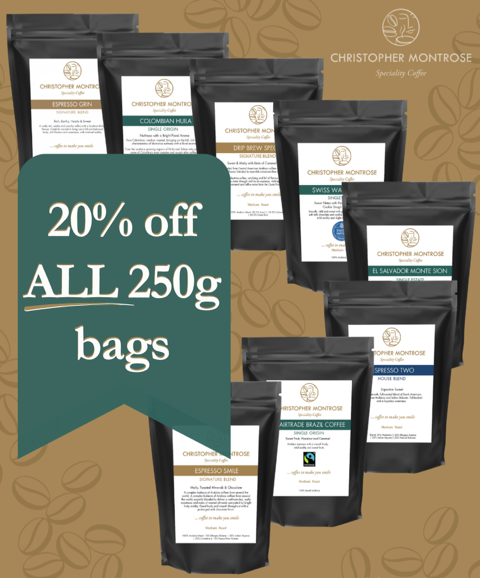
From our own range, Espresso Grin is a medium-dark, full-bodied blend with low acidity, built on Brazil, Colombia, Guatemala and Sumatra. Fairtrade Brazil is a clean, mild natural process coffee with a medium body. Swiss Water Decaf is another Brazilian natural with mild acidity and notes of roasted peanut and milk chocolate.
Black coffee is usually a little more acidic than black tea, though both sit in the mildly acidic range. Adding milk to either raises the pH slightly.
Sourness is usually under-extraction. Try a finer grind, water just off the boil (around 92 to 96°C) or a slightly longer brew. If that doesn’t fix it, the beans may simply be a very light roast.
Decaffeination changes the bean a little, and some people find decaf easier on the stomach, but it’s not acid-free. The roast and origin matter more than the caffeine.
Milk softens the taste of acidity and raises the pH a touch. It’s one reason a bright coffee that seems sharp black can taste lovely as a flat white.
If you’re new to the idea, try a bright coffee and a mellow one side by side. Espresso Smile has a bright, fruity acidity; Espresso Grin is low in acidity and punchy, and the two come together in our Espresso Explorer kit. Brew them the same way, at the same strength, and taste them both black. The difference in acidity will be obvious within a sip, and you will know which side of the line you prefer.