Spend a further £18.00 for free delivery
Free delivery on orders over £18. Shop Now.
Free delivery on orders over £18
The difference between light, medium and dark roasts is how long and how hot the beans are roasted. Light roasts are taken out around the first crack and keep more of the coffee’s origin flavour and acidity. Medium roasts are more balanced and sweeter. Dark roasts are roasted towards or past the second crack, giving a heavier, more bitter, smoky cup with low acidity. Contrary to popular belief, darker doesn’t mean more caffeine.
If a café has ever asked which roast you’d like and you weren’t sure, this is what they meant.
Green coffee beans are dense, grassy and not much use for brewing. As they heat up in the roaster, moisture is driven off, sugars caramelise and hundreds of aroma compounds develop. The beans turn from green to yellow, then through shades of brown.
Two audible moments help roasters judge progress:
The temperatures are approximate and vary with the roaster and the beans (this roast degree guide gives a useful breakdown). Roasters also control how fast they get there, which matters as much as where they stop.
| Light | Medium | Medium-dark | Dark | |
|---|---|---|---|---|
| Colour | Light brown, dry surface | Medium brown, dry surface | Rich brown, a few spots of oil | Very dark brown to almost black, oily |
| Approximate end temperature | About 196 to 205°C | About 210 to 220°C | About 220 to 225°C | About 225 to 240°C |
| Roast stage | At or just after first crack | Between first and second crack | Approaching second crack | At or beyond second crack |
| Flavour | Fruity, floral, citrus, sometimes grainy or nutty | Caramel, chocolate, nuts, balanced | Dark chocolate, spice, toasted | Smoky, bittersweet, roasty |
| Body | Light | Medium | Fuller | Heavy but can feel thin if very dark |
| Acidity | High | Medium | Low to medium | Low |
| Caffeine | Much the same across all roasts (see below) | |||
Light roasts are roasted for the shortest time at the lowest temperatures, finishing at or shortly after first crack. They keep far more of the bean’s own character, so you taste where the coffee came from: the fruit of a washed Ethiopian, the citrus of a high-grown Central American.
In that sense, light roasts have the most distinctive flavour, even though the cup feels lighter. They can taste bright, fruity and floral, and sometimes nutty or grainy if they’re very light. Lighter roasts also keep more of the bean’s chlorogenic acids, which break down as roasting goes on.
The longer coffee is roasted, the more of its original acidity gives way to roast flavours. Medium roasts sit in the sweet spot. They are roasted for longer and hotter than light roasts, finishing after first crack but before second crack. Acidity is softer, sweetness comes forward, and caramel, chocolate and nut flavours develop.
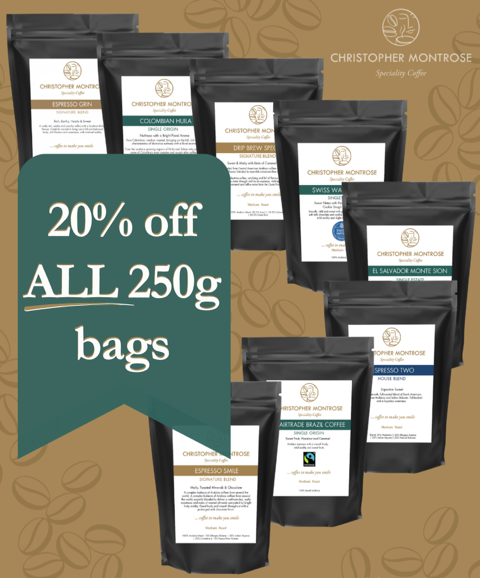
Medium is the most popular roast level, and it’s the most versatile. Our Fairtrade Brazil is medium roasted to bring out its smooth, delicate nature and sweet fruit, and our Espresso Smile blend is a medium roast too, with malty sweetness, toasted almonds and a long milk chocolate finish.
Dark roasts go to the second crack or a little beyond. The beans lose more moisture, oils rise to the surface, and roast flavours take over from origin flavours. The result is bittersweet and smoky, with low acidity and, at its best, a deep, comforting richness. Pushed too far, it simply tastes burnt.
Medium-dark is the halfway house, and it’s the classic Italian espresso style. Our Espresso Grin is roasted medium-dark for a rich, earthy, punchy cup with full body and low acidity. It cuts through milk well.
Dark roasts are often said to be gentler on the stomach because they taste less acidic. Some people do find them easier to drink, but responses vary.
No, and the reverse isn’t really true either. Caffeine is very stable during roasting, so a bean keeps almost all of it. What changes is weight and density: dark roasted beans lose more moisture, so they are lighter and larger.
That leads to a small twist. Measured by weight, darker roasts can contain slightly more caffeine, because you need more beans to make up the same number of grams. Measured by the scoop, the difference shrinks considerably. Data reported by Sprudge found a difference of about 9% by volume. In practice, how much coffee you use, the species (robusta has about twice the caffeine of arabica) and how you brew matter far more than the roast. If you want more of a kick, pick a stronger recipe, not a darker roast.
| Brew method | Roasts that work well |
|---|---|
| Pour over and filter | Light and medium, to show off clarity and sweetness |
| AeroPress | Any, adjust the recipe to suit |
| Cafetière | Medium and medium-dark for body |
| Espresso, black | Medium for sweetness and brightness |
| Espresso with milk | Medium-dark and dark to cut through the milk |
| Moka pot | Medium-dark and dark |
| Cold brew | Medium and darker, for chocolatey, low-acid results |
These are starting points. A good light roast can make a superb espresso, and a medium-dark coffee can be lovely through a filter. If you’re choosing a filter method, our comparison of pour over and drip brew may help.
If you like a bold, full-bodied cup, our strong coffee collection brings those together.
It depends what you mean. Dark roasts taste strongest in a roasty, bitter way. Light roasts have the most distinctive origin flavour. Caffeine is much the same across roasts.
It tastes brighter and more acidic, yes. Good acidity is pleasant, like the tang of a ripe apple, not sourness. For more on this, read our guide to coffee acidity.
Oils move to the surface as roasting approaches and passes second crack, so oily beans are usually medium-dark or dark. Very oily beans can clog some bean-to-cup grinders.
Medium. It’s balanced, familiar and works with almost any brew method, which makes it an easy place to start before exploring either way.
If you can’t decide, start with the Fairtrade Brazil. It’s clean, mild and sweet, and it makes a good cup however you brew it.