Spend a further £18.00 for free delivery
Free delivery on orders over £18. Shop Now.
Free delivery on orders over £18
Water quality affects the taste of your coffee more than almost anything else you control at home. A cup of filter coffee is well over 98% water, and the minerals dissolved in that water decide how much flavour is pulled out of the grounds and how it tastes once it’s in the cup. Hard water tends to give a heavier, flatter coffee; very soft water can taste thin and sharp. Something in the middle is ideal.
Do you know whether you live in a hard or soft water area, or what else is in your tap water? Most of us don’t, and it’s worth finding out before you spend money on a new grinder.
Brewing is extraction. Hot water dissolves acids, sugars, oils and aromatic compounds from the ground coffee. The minerals already in the water take part in that process. Magnesium and calcium help pull flavour compounds out of the coffee and hold on to them. Bicarbonate, which makes up most of what water companies call alkalinity or carbonate hardness, works as a buffer and neutralises acids.
That buffering is the part people notice. A little bicarbonate rounds off harsh edges. Too much flattens the acidity that gives coffee its life, and the cup tastes dull, chalky or bitter. Water with almost no minerals goes the other way: extraction is uneven and the coffee can taste hollow and sour. If you have read our article on coffee acidity, this is why the same beans can taste bright in one kitchen and flat in another.
Chlorine, which is added to tap water as a disinfectant, is the other common culprit. It can give water a faint swimming-pool smell and taste that carries straight through to the cup.
Hardness comes from geology. Rain that soaks through chalk or limestone picks up calcium and magnesium on the way, while water collected in upland reservoirs on harder rock stays soft. In broad terms:
Your water company will tell you the hardness for your postcode, usually on its website. United Utilities uses a common scale: below 75 mg/l as calcium carbonate is very soft, 125 to 250 mg/l is moderately hard, and above 375 mg/l is very hard.
The Specialty Coffee Association (SCA) publishes a water standard for brewing. The headline figures are below. Total dissolved solids (TDS) is simply the overall amount of minerals in the water.
| Measure | SCA target | Acceptable range |
|---|---|---|
| Total dissolved solids | 150 mg/l | 75 to 250 mg/l |
| Calcium hardness (as CaCO3) | 68 mg/l | 17 to 85 mg/l |
| Total alkalinity | 40 mg/l | At or near 40 mg/l |
| pH | 7.0 | 6.5 to 7.5 |
| Sodium | 10 mg/l | At or near 10 mg/l |
| Chlorine | 0 mg/l | None |
Compare that with the hardness scale above and you can see the problem in hard water areas: water in the “hard” band, at 250 mg/l or more, carries several times the calcium hardness the SCA suggests, usually with plenty of alkalinity too. In the softest areas the opposite applies, and water can sit near or below the bottom of the range.
A jug filter is the easiest improvement for most people. The carbon removes chlorine and odours, and most cartridges also reduce carbonate hardness, which helps in hard water areas. Change the cartridge when the maker suggests; an old one stops doing much and can harbour bacteria.
Bottled water works, but read the label rather than grabbing any brand. Look for a dry residue (the figure for total dissolved solids) somewhere between 75 and 250 mg/l, with modest calcium and low sodium. Some well-known mineral waters are far too hard for coffee. It’s also an expensive and plastic-heavy habit for your daily cup, so we see it as a useful experiment rather than a routine.
Distilled water contains no minerals at all, and that’s the problem. Coffee brewed with it tastes flat and empty, and some espresso machines rely on a little mineral content for their sensors to work. Enthusiasts who use distilled or reverse osmosis water add minerals back using sachets or recipes made for the purpose.
Hard water affects your kit as well as the taste. When it’s heated, calcium carbonate drops out as limescale, which coats kettle elements, boilers and the narrow pipes inside espresso machines. Scale slows heating, makes temperatures unstable, blocks the shower screen and is the reason many home espresso machines die early. Anyone who has lived in London will recognise the white crust on the kettle.
If you’re in a hard water area, filter the water you put in the machine and descale as often as the manufacturer recommends, using a descaler they approve. Soft water is easier on machines, though water that’s very soft and slightly acidic can, over many years, be hard on some metal parts. Check the machine’s manual for its own guidance.
It can make coffee taste heavier and punchier, but often at the cost of brightness and sweetness. Softer water tends to give a lighter, cleaner cup.
Yes, especially in hard water areas. A cafetière shows off body and sweetness, and those are exactly what heavy alkalinity dulls.
Ion-exchange softeners swap calcium and magnesium for sodium, which helps with scale but leaves water high in sodium and still full of bicarbonate. Most people keep an unsoftened tap for drinking and coffee.
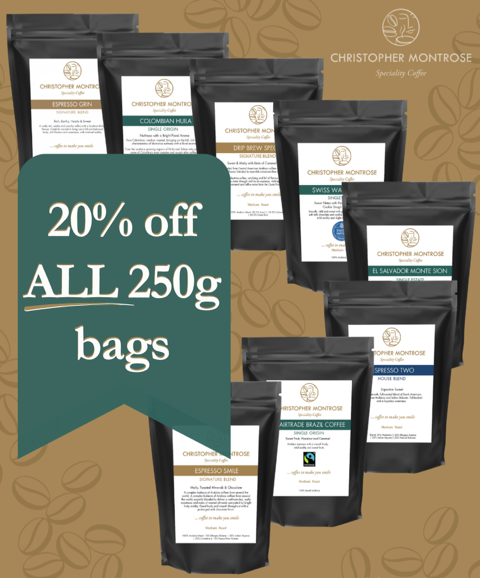
Richer, rounder coffees cope better than delicate, high-acid ones. Drip Brew Special, a sweet, malty filter blend, and Espresso Grin both hold up well.
Good water will not rescue stale beans, so pair it with freshly roasted coffee and a decent grind. Our guide to filter coffee covers ratios and timings, and the filter and cafetière collection is a good place to start if you want something that shows off the difference a jug filter makes.