Spend a further £18.00 for free delivery
Free delivery on orders over £18. Shop Now.
Free delivery on orders over £18
Coffee and cheese work together far better than most people expect. The roasted, bitter and sweet notes in coffee cut through the fat and salt in cheese, and the cheese softens the coffee in return. As a starting point, strong coffee suits strong, aged cheese (an espresso with a sharp Cheddar), medium roasts suit soft, creamy cheeses like brie, and light, bright coffees go well with fresh cheeses such as goat’s cheese or mozzarella.
That rule of thumb will get you a good plate. The rest of this guide explains why, gives a pairing table for British and continental cheeses, and shows you how to run a coffee and cheese tasting at home.
Think of how well cheese sits with port, beer or a dark chutney. Coffee does a similar job. It brings bitterness and roasted sweetness, and in many coffees a fruity acidity, all of which balance the richness of cheese. Hot coffee also melts the fat on your palate, so each new sip resets things for the next bite.
Some pairings work because the flavours match (nutty coffee with nutty cheese). Others work because they contrast (a salty blue with a sweet, chocolatey coffee). Both approaches are valid. The trick is to keep the coffee and the cheese at roughly the same intensity, so neither drowns the other out.
Match intensity and flavour notes. A bold, darker roast pairs well with strong, aged cheeses like mature Cheddar or aged gouda. A lighter roast with fruity or floral notes suits milder cheeses such as brie or goat’s cheese. If you put a delicate goat’s cheese next to a very dark, smoky espresso, you will mostly taste espresso.
Balance the acidity and sweetness in each. Coffees with higher acidity, such as many Ethiopian and Kenyan coffees, pair well with creamy, tangy cheeses like goat’s cheese or Camembert, because the brightness in the cup echoes the lactic tang in the cheese. Coffees with lower acidity and sweeter notes, like many Brazilian and Colombian coffees, sit nicely with nutty or caramel-flavoured cheeses such as Gruyère or aged gouda. If you want to know more about what acidity means in coffee, our guide to coffee acidity explains it.
Consider body as well as flavour. A smooth, creamy cheese complements a smooth, rounded coffee: brie with a mild, clean filter coffee in the Jamaican Blue Mountain style is a good example. The crumbly, crystalline texture of a well-aged parmesan stands up to a full-bodied dark roast. Crumbly British cheeses like Wensleydale and Lancashire are lighter on the palate than they look, so they suit coffees with medium body.
This table groups coffees by roast and origin style, then suggests cheeses and one of our coffees to try. Treat it as a starting point rather than a rulebook.
| Coffee style | Typical flavours | Cheeses to try | Our coffee to start with |
|---|---|---|---|
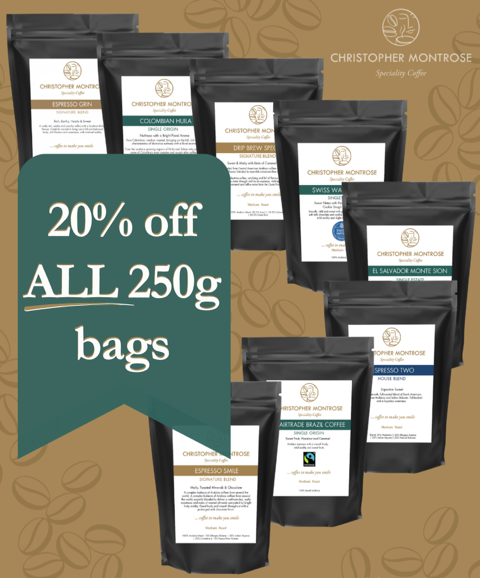
| Lighter espresso blend with East African coffee | Bright fruit, toasted almond, milk chocolate | Fresh goat’s cheese, Wensleydale, Cornish Yarg, mozzarella | Espresso Smile |
| Washed Colombian, medium roast | Full, rich, gentle fruit, caramel | Brie, aged gouda, goat’s cheese | Colombian Huila |
| Natural process Brazil, medium roast | Clean, mild, nutty, sweet fruit | Parmesan, mature Cheddar, Lancashire, Stilton | Fairtrade Brazil |
| Sweet, mild filter blend | Malty, smooth, toffee with milk | Camembert, Gruyère, Manchego, brie | Drip Brew Special |
| Medium-dark blend with Indonesian coffee | Earthy, cocoa, heavy body, low acidity | Extra mature Cheddar, Stilton, Stinking Bishop, aged parmesan | Espresso Grin |
| Decaf, medium roast | Roasted peanut, milk chocolate, cookie dough | Young gouda, Wensleydale, Lancashire | Swiss Water Decaf |
Espresso Grin is our medium-dark, Italian-style blend of Brazil, Colombia, Guatemala and Sumatra. It’s earthy and punchy, with a full body and low acidity, so it needs a cheese that can answer back. An extra mature Cheddar is the classic match; the salt and the savoury crystals meet the coffee’s roasted bitterness head on. Stilton works for the same reason, and a sliver of Stinking Bishop, the pungent washed-rind cheese from Gloucestershire, is a bold pairing that a strong espresso handles better than most wines do.
Espresso Smile is lighter, with malty sweetness, toasted almonds, a bright fruity acidity and a long milk chocolate finish. The Ethiopia Sidamo in the blend brings fruit, which suits fresher, tangier cheeses. Try it with a young goat’s cheese, a slice of crumbly Wensleydale, or Cornish Yarg, whose nettle-wrapped rind gives a faintly grassy edge. As a flat white it’s lovely with a mild, creamy cheese.
Brazilian coffee is known for nutty, chocolatey sweetness. Our Fairtrade Brazil, a natural process coffee from the COOCAFE cooperative in Minas Gerais, is clean and mild with a medium body and sweet fruit. Parmesan is an easy win: its salty, savoury flavour brings out the coffee’s nuttiness. Aged Cheddar and a creamy Lancashire also work, and for a contrast, try a blue. Stilton’s tang against the coffee’s sweetness makes a lively pairing.
Colombian Huila is full and rich, deep but delicate, from smallholder lots in Huila and Tolima. It suits soft, buttery cheeses. Brie is the obvious partner, its creaminess rounding off the cup. The caramel and nutty notes of an aged gouda bring out the coffee’s sweetness, and a tangy goat’s cheese lifts its gentle fruit. You can read more about the coffee in what Colombia Huila coffee tastes like.
We blended Drip Brew Special to resemble Jamaican Blue Mountain, so it pairs with many of the same cheeses. It’s sweet and malty with a smooth, mild flavour. Camembert’s creamy, earthy notes sit well with it, Manchego’s nutty sweetness brings out its softer side, and Gruyère suits its gentle complexity. Add a splash of milk and the caramel and toffee notes come forward, which is very good with a mild brie.
A tasting is easy to put together and makes a good alternative to the usual wine and cheese evening, especially if some guests are driving.
For a later evening, swap one of the coffees for Swiss Water Decaf. Its roasted peanut and milk chocolate notes go well with young gouda, and nobody lies awake afterwards.
A sharp, mature Cheddar or an aged parmesan. Both are strong and salty enough to stand up to the concentration of an espresso.
Yes, especially with sweeter, chocolatey coffees such as Brazilian beans, or a darker roast. The contrast between salty tang and roasted sweetness is the point.
Black coffee shows its flavours more clearly, so start there. A little milk can work with mild, creamy cheeses, but it tends to blur pairings with strong ones.
A medium roast. It’s forgiving and pairs with the widest range of cheeses. Our guide to light, medium and dark roasts explains the differences.
If you only try one pairing this week, make it a cafetière of Fairtrade Brazil with a wedge of good mature Cheddar. It’s simple, it’s very British, and it explains the whole idea in two mouthfuls.