Spend a further £18.00 for free delivery
Free delivery on orders over £18. Shop Now.
Free delivery on orders over £18
Yes, you can eat roasted coffee beans, and for most healthy adults a small handful is perfectly safe. The thing to watch is caffeine. A roasted arabica bean contains very roughly 1.5 to 3mg of caffeine, so a few dozen beans can add up to as much as a cup of coffee, and it’s easy to keep crunching without noticing.
Eating coffee beans, plain or coated in chocolate, has become a popular snack. This piece covers what is actually in them, how many is sensible, which beans taste best and how to make your own chocolate-covered coffee beans.
Roasted coffee beans are food. They are the same thing you grind and brew, just eaten whole. The difference is that when you brew coffee, the water extracts only part of what is in the bean and you throw the grounds away. When you eat the bean, you get all of it: the caffeine, the oils, the fibre and the acids.
That makes the main risks the same as drinking too much coffee, only arriving faster and less obviously. Most people are fine with a small number. People who are pregnant, sensitive to caffeine, prone to heartburn or taking medication that interacts with caffeine should be more careful. This isn’t medical advice; if you have a health condition or are pregnant, check with your GP.
Less than many websites claim. A study measuring caffeine in individual coffee beans found most coffees contained around 10 to 12mg of caffeine per gram (Fox et al., Journal of Agricultural and Food Chemistry, 2013). A single roasted arabica bean weighs somewhere in the region of 0.15g, which puts it at roughly 1.5 to 3mg depending on the bean’s size and the coffee. Caffeine Informer arrives at similar figures.
Robusta beans contain roughly twice as much caffeine as arabica, so they come in higher. (All our coffees are 100% Arabica; our guide to arabica and robusta explains the difference.) Chocolate-covered beans add a little more, because dark chocolate contains some caffeine too.
| Roasted arabica beans | Approximate caffeine |
|---|---|
| 10 beans | 15 to 30mg |
| 25 beans | 40 to 75mg |
| 50 beans | 75 to 150mg |
| 100 beans | 150 to 300mg |
These are estimates. Bean size and roast vary, and individual beans differ more than you might think. For comparison, the NHS puts a cup of instant coffee at about 100mg, with filter coffee usually higher (NHS).
The European Food Safety Authority says that for healthy adults, up to 400mg of caffeine a day from all sources raises no safety concerns, and single doses of up to 200mg are fine (EFSA). In pregnancy, the NHS advises no more than 200mg a day.
On the numbers above, 200mg would be somewhere between about 70 and 130 arabica beans. In practice we would suggest far fewer. Remember to count the coffee, tea, cola and chocolate you have had the same day, and keep in mind that EFSA notes even 100mg close to bedtime can affect sleep in some adults. A small handful of 10 to 20 beans as an occasional snack is a sensible limit for most people.
You will also see claims that eating beans gives you more antioxidants than drinking coffee. Beans do contain compounds such as chlorogenic acids, but we wouldn’t eat them for health reasons. If you’re interested in what the research says about coffee and health, our article on whether coffee is good for you covers it.
Raw (green) coffee beans are hard, grassy and unpleasant, so stick to roasted. Within roasted coffee, roast level makes the biggest difference:
| Roast | Eating quality |
|---|---|
| Light | Dense and hard to bite, with a sharper, more acidic taste. Not ideal for snacking. |
| Medium | Sweeter, nutty and chocolatey. Good plain or coated. |
| Medium-dark to dark | Crisp, brittle and easy to crunch, with cocoa and roasted notes. The most popular choice, especially under chocolate. |
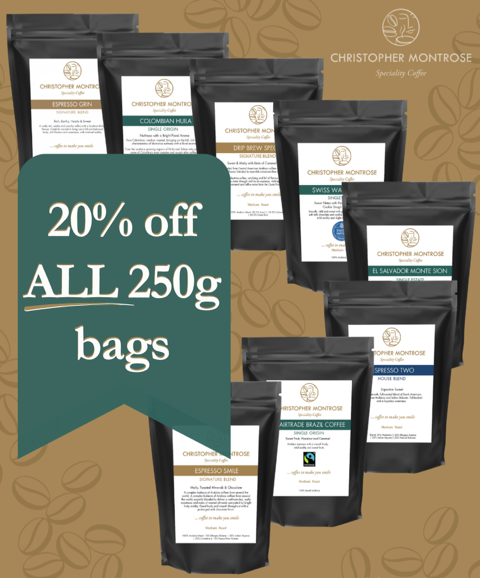
Darker roasts are more brittle because longer roasting drives out moisture and makes the bean more porous. They also tend to taste less acidic, which matters if you’re prone to heartburn. Our Espresso Grin, a medium-dark blend with a rich, earthy, low-acidity profile, is the one we would reach for. For a sweeter, nuttier bean, Fairtrade Brazil works well. Always use whole beans from a fresh bag: stale beans taste flat and slightly cardboard-like.
Shop-bought versions are often made with cheap beans. Making your own takes about 20 minutes plus setting time.
You will need: 50g roasted whole coffee beans, 150g good dark chocolate (around 70% cocoa) or milk chocolate, 1 tablespoon cocoa powder (optional), and a baking tray lined with baking parchment.
Remember the coating doesn’t change the caffeine in the bean, and it makes them much easier to eat by the handful.
Quality matters too. Buy freshly roasted beans from a roaster you trust, so you know where the coffee came from and when it was roasted.
Bean for bean, you take in all the caffeine instead of what the water extracts. But a single bean has only a few milligrams. It takes several dozen to match a typical cup.
No. “Espresso beans” are simply coffee roasted and blended with espresso in mind, often a little darker. They aren’t a separate type of bean.
We wouldn’t give them to children. EFSA sets a much lower caffeine level for children, based on body weight, and a few beans could reach it quickly.
Yes. Decaf beans still have the flavour and crunch with only a trace of caffeine, so they are a good choice for chocolate-coated beans in the evening.
If you want to try it, buy whole bean coffee rather than anything pre-ground, start with a medium-dark roast like Espresso Grin, and keep the portion small. Or test your palate with the two quite different coffees in our South American Coffee Starter Kit, brewed and crunched, and see how many flavours you can pick out.