Spend a further £18.00 for free delivery
Free delivery on orders over £18. Shop Now.
Free delivery on orders over £18
Better coffee costs more per bag, but far less per cup than most people assume. A 250 g bag makes roughly 15 to 25 cups depending on how much you use, so paying a few pounds more for speciality beans usually adds only pennies to each cup. That extra money buys better beans, fresher coffee and, in many cases, a fairer price for the farmer.
The maths is simple. Divide the weight of the bag by the amount of coffee you use per cup, then divide the price of the bag by the number of cups.
A typical dose is around 10 g for a modest cup of filter or cafetière coffee and 16 to 18 g for a double espresso. So a 250 g bag gives you:
Using example prices, it works out like this. These are illustrative figures to show the maths, not our prices or anyone else’s.
| Example | Example price | Cups | Cost per cup |
|---|---|---|---|
| Speciality beans, 250 g, filter dose (10 g) | £10 a bag | 25 | 40p |
| Speciality beans, 250 g, espresso dose (16.5 g) | £10 a bag | 15 | about 67p |
| Cheaper beans, 250 g, filter dose (10 g) | £5 a bag | 25 | 20p |
| High-street flat white | £3.80 a cup | 1 | £3.80 |
On those example numbers, doubling what you spend on beans adds about 20p to a cup of filter coffee. Even the dearer homemade espresso costs a fraction of a takeaway, and you still have to add milk to either. Plug in your own bag price and dose and the pattern will almost always hold.
Cheap coffee is often made from lower-grade Arabica or Robusta with more defects: underripe, broken or insect-damaged beans that bring flat, bitter or woody flavours. Speciality coffee is graded strictly, scores 80 points or more on the professional scale and comes from specific farms or regions known for particular flavours. Our article on Arabica and Robusta explains why the species matters, and what speciality coffee means covers the grading.
How cherries are picked, fermented and dried has a huge effect on the cup. Higher-priced coffees tend to be hand-picked at ripeness and processed with care, whether washed, natural or honey, which gives cleaner, clearer and more complex flavours. Corners cut at this stage can’t be fixed by the roaster.
Coffee is at its best within weeks of roasting. Much mass-market coffee is roasted in large batches and may sit in warehouses and on shelves for months, often marked with a best before date rather than a roast date. Smaller roasters tend to roast closer to the time you buy, and that freshness shows in aroma and sweetness. The way you store it matters too.
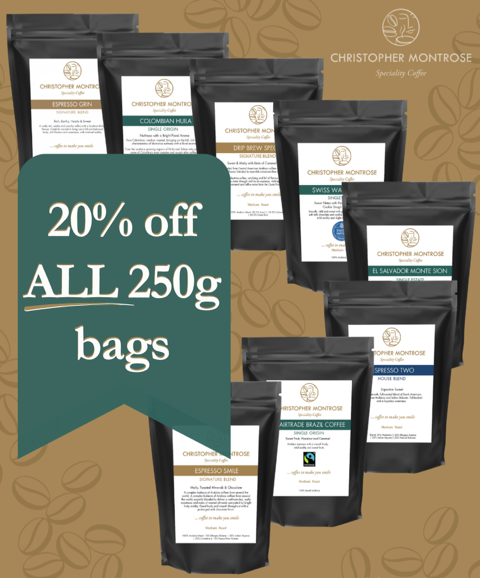
Commodity coffee prices swing widely and at times fall below what it costs many smallholders to grow the crop. Speciality buyers generally pay more for quality, and certifications such as Fairtrade set a minimum price with an extra premium for community projects. Paying more doesn’t guarantee a fair deal on its own, so it helps to buy from people who can tell you where the coffee came from. Our Fairtrade Brazil comes from the COOCAFE cooperative in Minas Gerais, Fairtrade certified since 2006.
Many higher-priced coffees come from farms using shade growing, agroforestry or recognised standards such as Rainforest Alliance, which protect soil, water and wildlife as well as workers. That work costs money, and someone along the chain has to pay for it.
This is the bit you notice. Cheap coffee tends to taste flat or harshly bitter. Good coffee has distinct tasting notes, fruity, floral, nutty or chocolatey, and a sweetness that needs less sugar to enjoy. We go into this further in what sets craft coffee apart.
No. Price is a rough guide, not a guarantee. Packaging, branding and scarcity can push prices up without improving the cup, and some very expensive coffees are more about novelty than taste. Look for things that actually indicate quality: the country and ideally the region or farm, the variety and process, a roast date, and a roaster who can tell you how they chose the coffee.
That last point is why we keep our range small. We tasted more than 5,500 coffees across farms, exporters, importers, roasters and baristas, and chose fewer than ten. We would rather sell a handful of coffees we’re sure about than fill a shelf.
Good beans can still be let down at home. A few cheap habits make sure you taste what you paid for:
That last one is where a subscription helps. Subscribe & Save delivers fresh coffee to your door regularly, so you’re never stuck with a stale bag or forced back to the instant.
Roughly 15 to 25, depending on your dose. At 10 g a cup you get about 25; at a double espresso dose of 16 to 17 g, about 15.
If you drink coffee daily and enjoy the taste, usually yes. The difference per cup is small and the difference in flavour isn’t.
Mostly lower-grade beans, large-scale roasting and long supply chains. Freshness and traceability are often the first things to go.
Not usually. Robusta, common in cheaper blends, has roughly twice the caffeine of Arabica, so speciality Arabica coffees can have less.
If you want to taste the difference for yourself, start with our single-origin Colombian Huila. It’s full, rich and delicate, and at a few pence more per cup than the cheap stuff, it makes the case better than we can.