Spend a further £18.00 for free delivery
Free delivery on orders over £18. Shop Now.
Free delivery on orders over £18
Craft coffee, sometimes called artisanal coffee, is coffee where quality, flavour and sustainability come first at every stage: growing, sourcing, roasting, brewing and serving. Regular, mass-market coffee is built around price and a uniform taste. Craft coffee is built around what a particular bean, from a particular place, can taste like when it’s handled well.
The difference shows up in the bean’s quality and origin, how and when it’s roasted, how finely it’s ground, the temperature of the water, the equipment used to brew it, and a good deal more. The table below sums it up.
| Craft coffee | Regular mass-market coffee | |
|---|---|---|
| Beans | High-grade arabica, chosen for flavour | Often lower-grade arabica or robusta, chosen for price |
| Traceability | Country, region, often farm, cooperative or lot | Frequently just “a blend of origins” |
| Roasting | Small batches, roast tailored to each coffee | Large industrial batches, often roasted dark for consistency |
| Freshness | Roast date on the bag, sold soon after roasting | Best-before date, can be months old |
| Flavour aim | Show the character of the origin | Taste the same every time, whatever the beans |
| Sustainability | Often certified or directly traceable sourcing | Varies widely |
Craft coffee usually starts with high-quality arabica, often single-origin beans from regions known for exceptional coffee, such as Ethiopia, Colombia, Brazil and Guatemala. These beans are chosen because their flavour reflects where they were grown: the altitude, the soil, the variety and the way the cherries were processed after picking.
Some craft coffee can be traced back to a particular region, town, family farm, community lot or even a hillside with its own microclimate and orientation to the sun. Many craft roasters buy coffee that meets speciality grade, a standard based on cupping scores and defect counts. Our article on speciality coffee explains how that grading works.
Roasting is where much of the flavour is made or lost. Craft roasters usually work in small batches so they can control the process closely, adjusting time and temperature to bring out the natural flavours of each coffee. A bright, fruity Ethiopian and a chocolatey Brazilian need different handling. Industrial roasting tends to go darker and more uniform, which hides defects but also hides character.
Precision matters. Every step is measured and recorded, from roast profile to grind size, so good results can be repeated. Experimenting and taking notes is part of the job. At home, the same idea applies: weighing your coffee and water makes a bigger difference than any gadget. A good starting point for filter or cafetière is about 60g of coffee per litre of water.
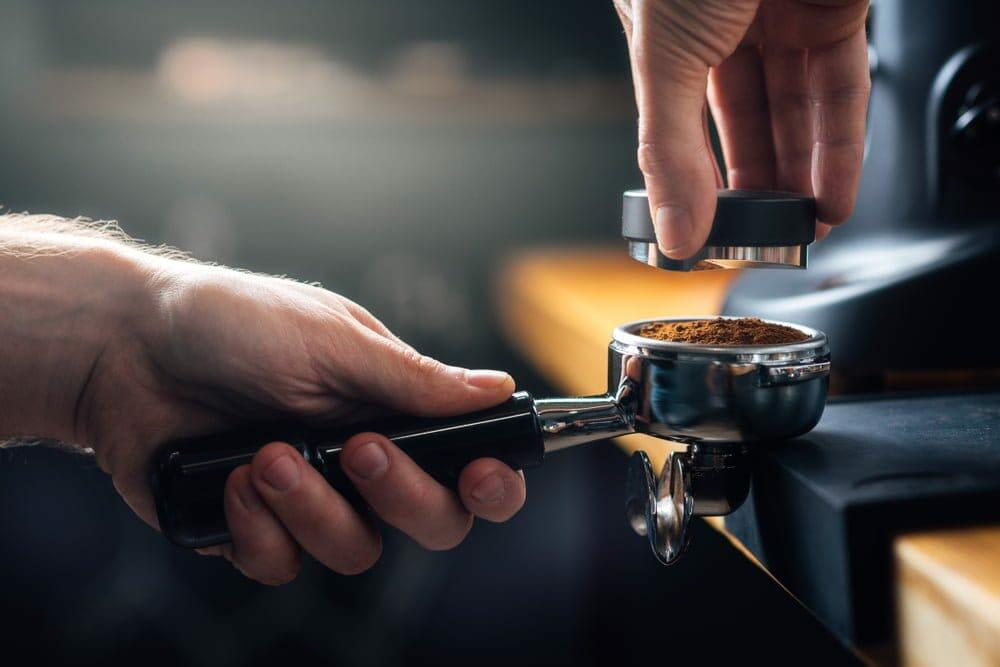
Once the beans are roasted and ground, brewing is the final stage. Pour-over, cafetière, AeroPress, espresso and cold brew all extract flavour differently, and craft coffee is usually matched to the method that suits it. Grinding fresh, just before brewing, makes a noticeable difference here.
Not necessarily. Mass-market coffee blends beans from many sources, often changing them from batch to batch, to keep a uniform flavour profile at the lowest cost. Craft coffee puts more emphasis on the uniqueness of origin, and single origins are where that shows most clearly.
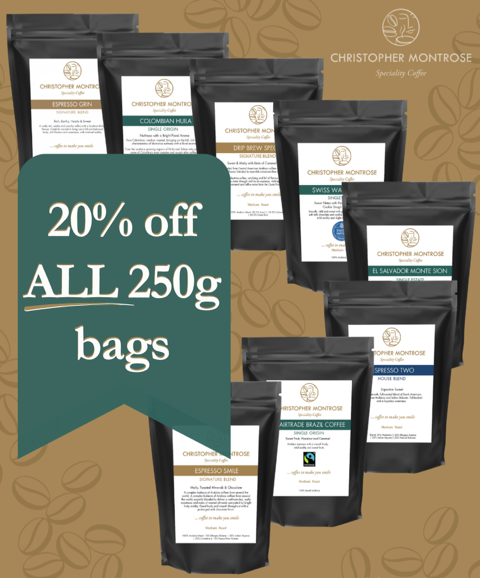
But a carefully built blend is craft too, when every component is known, chosen for a reason and roasted with care. Our Espresso Grin, for instance, combines named origins in fixed proportions (Brazil Daterra, Colombia, Guatemala and Sumatra) to produce a particular rich, earthy espresso. The difference from a commodity blend is that the recipe is fixed, the beans are traceable and the aim is flavour, not cost.
Craft coffee often goes hand in hand with more sustainable and environmentally friendly practices, such as:
Certification schemes help too. Our Fairtrade Brazil comes from the COOCAFE cooperative in Minas Gerais, Fairtrade certified since 2006, and the Brazilian component of Espresso Grin is from the Rainforest Alliance certified Daterra estate. Practices like these protect the environment and the long-term future of coffee farming.
We keep our range deliberately small. Chris and Monty, our two founding directors, have spent years tasting coffee around the world. Across more than 5,500 tastings with farms, exporters, importers, roasters and baristas, they chose fewer than ten coffees. Each one is there because it does something specific well, whether that’s a breakfast single origin or an Italian-style espresso blend, and each is ethically sourced.
A short list makes it easier to choose, and it means every coffee gets proper attention. You can see the single origins in our Single Estates & Origins collection.
Craft coffee costs more per bag, but the gap per cup is smaller than people expect. At 15g a cup, a 250g bag makes around 16 cups, so even a meaningful difference in bag price is a few pence per cup. For that you get fresher coffee, more flavour and a clearer idea of where your money goes. We cover this in more detail in why spend more on your coffee.
They overlap. Speciality refers to a quality grade for the beans. Craft describes the whole approach, including roasting and brewing. Most craft coffee uses speciality-grade beans.
Not by definition. Strength depends on how much coffee you use and the roast. Craft coffee simply tends to have more flavour to show, whatever the strength.
Look for a roast date. Whole beans are usually at their best within a few weeks of roasting if stored airtight, away from light and heat.
No. A cafetière, a set of kitchen scales and a decent grinder will get you most of the way.
The easiest way to taste what we mean is a side-by-side. Brew our Colombian Huila, a single origin from smallholder lots, next to Espresso Smile or Espresso Grin, and notice how a single origin and a well-built blend each tell you something different.