Spend a further £18.00 for free delivery
Free delivery on orders over £18. Shop Now.
Free delivery on orders over £18
The main benefit of Swiss Water decaf is simple: you get the taste and ritual of coffee with only a few milligrams of caffeine. Beyond that, decaf keeps most of coffee’s polyphenols, and large observational studies have linked it with lower risks of type 2 diabetes, liver disease and early death. Those links are associations, not proof, so below we set out what the evidence does and doesn’t show for each benefit.
If you want to know how the process itself works, start with our guide to what Swiss Water decaf is. This article is about health.
This isn’t medical advice; if you have a health condition or are pregnant, check with your GP.
Swiss Water removes 99.9% of the caffeine from the green coffee. The US Food and Drug Administration says a typical cup of decaf contains 2 to 15 mg of caffeine per 8 fl oz (about 240 ml), against roughly 100 mg in a cup of instant coffee by the NHS’s reckoning. Decaf isn’t caffeine free, but it’s close enough that most people can stop counting.
The European Food Safety Authority notes that a single dose of 100 mg of caffeine close to bedtime may affect how long and how well some adults sleep. A regular mug of filter coffee after dinner can easily reach that. A decaf will not. If you love an evening coffee but find yourself staring at the ceiling at 1am, this is the most practical swap you can make.
The FDA lists the effects of too much caffeine as including a faster heart rate, palpitations, anxiety, jitters, upset stomach and headaches, and points out that there is wide variation in how sensitive people are. Some people feel one espresso for hours. For them, decaf is the difference between enjoying coffee and avoiding it.
The NHS advises that you should not have more than 200 mg of caffeine a day in pregnancy, and EFSA gives the same figure for pregnant and breastfeeding women. Remember that tea, cola, chocolate and energy drinks count too. A few cups of decaf uses only a small part of that allowance, which is why it’s such a common swap. Check with your midwife or GP if you’re unsure what is right for you.
Coffee contains polyphenols, such as chlorogenic acids. Harvard’s T.H. Chan School of Public Health notes that the polyphenols in both regular and decaf coffee can act as antioxidants, helping to reduce oxidative stress and inflammation in cells. Caffeine isn’t the main source of those compounds, so taking it out leaves much of the good stuff behind. Because the Swiss Water Process is designed to keep the coffee’s other soluble compounds in the bean, it’s a good method for holding on to them.
A meta-analysis of 28 studies covering more than a million people found that each extra daily cup of coffee was linked to a lower risk of type 2 diabetes, and decaf was included. Each extra cup of caffeinated coffee was associated with a 9% lower risk and each cup of decaf with a 6% lower risk, and the difference between the two was not statistically significant. That suggests something other than caffeine is involved.
A 2022 study of UK Biobank participants, published in the European Journal of Preventive Cardiology, found that people drinking two to three cups of decaf a day had the lowest risk of cardiovascular disease, and a 14% lower risk of death from any cause over the study period than non-coffee drinkers. One caveat from the same study: unlike caffeinated coffee, decaf was not linked with fewer heart rhythm problems.
Another UK Biobank analysis followed nearly 500,000 people for around ten years. Coffee drinkers had a 21% lower risk of chronic liver disease and a 49% lower risk of dying from it, and the researchers found similar results for decaf as for coffee overall.
This is the one where we have to be careful. The NHS lists coffee among the things that can trigger heartburn. A small 1997 study in people with reflux disease found that decaffeinating coffee reduced reflux compared with regular coffee. But a later meta-analysis found no significant link between coffee drinking and reflux disease overall.
Our reading is that coffee affects people differently. If regular coffee gives you heartburn, decaf is worth a try. If decaf still bothers you, it’s probably coffee itself, not the caffeine, and that’s a conversation for your GP or pharmacist.
Solvent-decaffeinated coffee is legal and regulated. In the UK and EU, methylene chloride residues in roasted coffee are capped at 2 mg per kg, and the authorities consider that safe. Even so, some people would simply prefer their coffee hadn’t been near a solvent at all, and Swiss Water decaf gives you that. We wouldn’t call this a proven health benefit; it’s peace of mind. Our comparison of decaf methods covers the solvents in more detail.
Almost all of the research on coffee and long-term health is observational. It shows that people who drink decaf tend to have lower risks of certain conditions, not that decaf causes those lower risks. Coffee drinkers can differ from non-drinkers in many ways, and researchers adjust for what they can. None of these studies looked at Swiss Water decaf specifically; they looked at decaf in general.
So treat decaf as a pleasant drink that seems compatible with good health, not as a supplement. If you want the wider picture on regular coffee, our article on whether coffee is good for you covers it.
Not in any proven way for most people. The studies above suggest decaf and regular coffee have broadly similar associations. Decaf is the better choice if caffeine affects your sleep, anxiety or heart rate, or if you’re limiting it in pregnancy.
There’s no good evidence either way on health outcomes. Its advantage is that no solvent is used, which some people prefer.
For caffeine, several cups of decaf still stays far below EFSA’s 400 mg daily guideline for healthy adults. The 2022 UK Biobank heart study found the lowest risks at around two to three cups a day.
Decaf still contains a little caffeine. If you’re thinking of giving coffee to children, ask your GP or health visitor first.
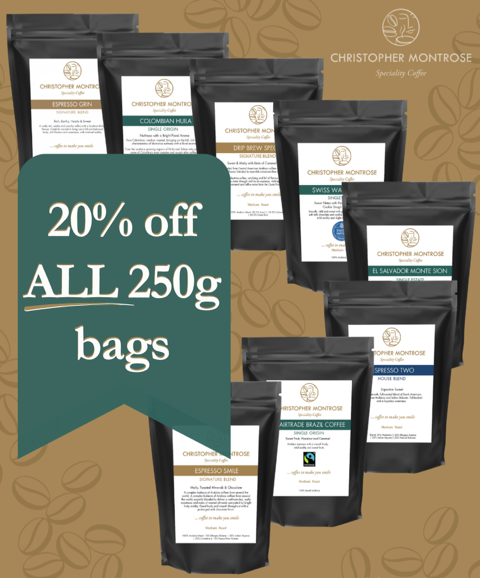
Our Swiss Water Decaf is a natural-process Brazil from the Cerrado with roasted peanut and milk chocolate notes and mild acidity, which makes it an easy evening coffee, with or without milk. You’ll find it, and anything else we offer without the caffeine, in our decaf collection.