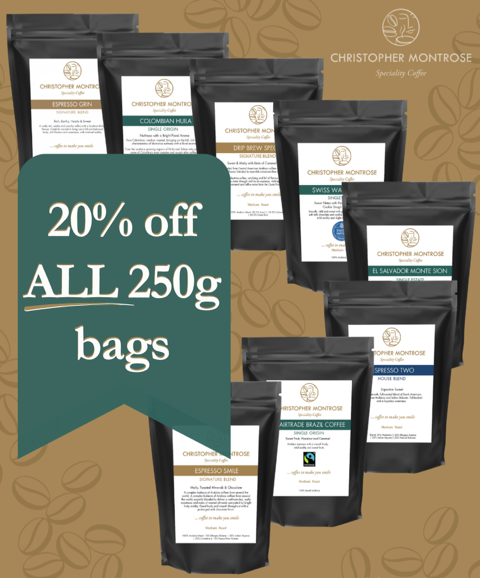
Spend a further £18.00 for free delivery
Free delivery on orders over £18. Shop Now.
Free delivery on orders over £18
For most people, the best way to use coffee at work is to drink it in the morning and early afternoon, stop by mid-afternoon so it doesn’t spoil your sleep, and keep a glass of water alongside it. Caffeine stays in the body for hours, the post-lunch slump is partly your body clock rather than your sandwich, and good coffee at work does more for a team than the caffeine alone.
Longer than most of us assume. According to the European Food Safety Authority, the average half-life of caffeine in healthy adults is about four hours, but it ranges from two to eight hours depending on the person. In other words, half the caffeine from a 2pm coffee could still be circulating at 6pm, and a quarter at 10pm.
That matters for sleep. EFSA notes that a single 100mg dose of caffeine (roughly a cup of instant coffee, by the NHS’s estimate) can affect sleep in some adults when taken close to bedtime. A 2013 study published in the Journal of Clinical Sleep Medicine gave people 400mg of caffeine six hours before bed and found it cut their measured sleep by more than an hour, even though they didn’t notice the difference themselves.
For healthy adults, EFSA considers up to 400mg of caffeine a day spread across the day to be safe, and the NHS advises no more than 200mg a day in pregnancy. Filter and coffee-shop coffee can contain more than instant.
There’s no single right answer, because people metabolise caffeine at different speeds. A sensible pattern for a nine-to-five looks like this:
| Time | What we’d suggest |
|---|---|
| Start of the day | Your first proper cup, with breakfast if you can |
| Mid-morning | A second cup if you want one; a good moment for a break away from the screen |
| After lunch | A smaller coffee, such as an espresso, if the slump bites |
| Mid to late afternoon | Switch to decaf, tea with less caffeine, or water |
If you sleep badly, the simplest experiment is to move your last caffeinated cup earlier by a couple of hours for a week and see what happens. A cup of Swiss Water Decaf keeps the 4pm ritual without the caffeine.
The early-afternoon dip in alertness is a familiar part of the working day. Sleep researchers generally link it to the body’s natural daily rhythm as well as to the meal itself, which is why a big, heavy lunch tends to make it worse but skipping lunch doesn’t make it disappear.
Coffee helps some people through it, but it isn’t the only tool. A few things that help:
If you do want coffee after lunch, a single espresso gives you the lift with less caffeine than a large mug.
Yes. The NHS suggests around 6 to 8 cups or glasses of fluid a day, and says lower-sugar drinks including tea and coffee all count. The idea that coffee dehydrates you is overstated for normal amounts. Water is still the best everyday drink, and a jug on the desk is an easy habit. If you find you’re drinking coffee mainly because you’re thirsty, that’s a sign to alternate.
The pandemic lockdowns changed how many of us work, and remote and hybrid working are now well established. With them went the familiar coffee machine routine: the quick break, the informal chat and catching up on office news, replaced by a kettle at home and a video call.
It also sparked a home coffee boom. Plenty of people now own a decent grinder or espresso machine and buy speciality beans, and coffee breaks at home have become more deliberate, a moment to step away from the screen and reset. If you’re brewing at home most days, a Subscribe & Save delivery means you don’t run out halfway through a Tuesday.
Workplace coffee has always been about people as much as caffeine. The coffee point is where colleagues bump into each other, swap ideas and sort out small problems before they become big ones. Virtual coffee breaks help, but they rarely recreate the chance conversations of a shared kitchen.
For businesses encouraging people back to the office, good coffee is a small, visible signal that the place is worth coming in for. Staff who have got used to decent coffee at home notice when the office offers a jar of instant.
The right setup depends on team size, how many cups you get through and who’s going to clean it.
| Setup | Best for | Effort | Coffee to use |
|---|---|---|---|
| Cafetières or pour over | Small teams of up to about 6 | Low cost, a bit of hands-on time | Ground for cafetière or whole bean with a grinder |
| Batch brew filter machine | Meetings and busy offices | Easy; brews a jug at a time | A filter blend such as Drip Brew Special |
| Bean-to-cup machine | Teams who want espresso drinks at a button press | Regular cleaning and descaling | Whole bean espresso |
| Traditional espresso machine | Offices with a keen barista or two | Most skill and upkeep | Whole bean espresso blends |
For batch brew, Drip Brew Special was created as a filter coffee and stays sweet and malty in a jug. For bean-to-cup machines, Espresso Grin is a crowd-pleaser with milk, being rich and low in acidity. We supply businesses directly through our wholesale service and can help you match beans and equipment to your team size and usage.
Given that caffeine’s effects can last well into the evening, many people sleep better if they stop by mid-afternoon. If you’re sensitive to caffeine, try stopping earlier.
EFSA puts the safe limit for healthy adults at 400mg of caffeine a day. How many cups that’s depends on the coffee and the size of the mug, so count big coffee-shop servings as more than one.
Yes. Decaf still contains a small amount of caffeine, but far less than regular coffee. Our guide to Swiss Water decaf explains how it’s made.
This isn’t medical advice; if you have a health condition or are pregnant, check with your GP about how much caffeine is right for you.